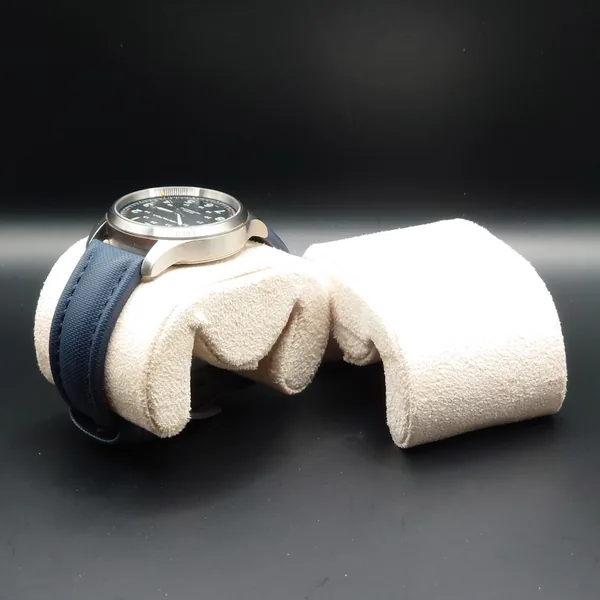
Watch Pillows Explained: Sizes, Materials and Correct Fit
A watch pillow looks like a trivial accessory. It is the part of a watch box that actually touches your watch, which makes it the part that matters most.
What a pillow is for
Three jobs. It holds the strap in the natural curve it takes on the wrist, so leather never creases along one line. It lifts the case back off the base so nothing rubs. And it stops the watch sliding around inside the compartment when the box is moved.
A watch resting flat in a box without a cushion fails all three at once.
Sizing: the loop is what counts
Fasten the watch as you wear it, lay it on its side, and measure around the inside of the loop it forms. That circumference is the number to match — not the case diameter.
A pillow should fill the loop with light, even contact. If you have to compress the pillow or stretch the strap to get it on, it is too big, and the tension goes straight into the spring bars. If the watch slides or rattles, it is too small and the case will move against the lining.
Materials
The two that matter are the outer fabric and the core.
- Velvet: soft, non-abrasive, and grips the strap lightly so the watch stays put. The usual choice for a reason.
- Suede and microfibre: similar feel, slightly more grip, can shed fine fibres onto a bracelet.
- Foam core: holds shape and springs back. This is what keeps the cushion supporting the strap years later.
- Loose fill (cotton wadding, beads): compresses permanently and goes flat within months. Avoid.
Common mistakes
Buying by case diameter instead of strap circumference is the big one. After that: reusing the hard plastic cushion a watch shipped with — those are sized for transit, not storage, and are usually too large. And forcing a stiff new leather strap over a full-size pillow before the leather has softened.
The Kollektion E.Type cushion is 47mm wide and fits watches from 160mm strap circumference upward, which covers most of what people own.