How to Store Watches Properly: A Collector’s Guide
Most watch damage does not happen on the wrist. It happens in a drawer, in a pile, or in a box that was never designed to hold a watch. Here is how to store a collection properly.
The three things that actually damage a stored watch
Storage problems are boringly consistent. Almost every scratched case back, crushed strap or seized crown traces to one of three causes.
- Contact with other objects. Two watches sharing a drawer will mark each other. Steel is harder than most case finishes, and a single bracelet link is enough to leave a permanent line across a polished flank.
- Unsupported straps. Leather that sits folded flat for months develops a crease that becomes a crack. Rubber and silicone take a set. A strap needs to hold its natural curve.
- Humidity and direct sun. Damp air corrodes spring bars and encourages mould on leather. Direct sunlight fades dials and dries out strap oils.
Give every watch its own space
The single highest-value change you can make is one watch, one compartment. It sounds obvious, but the default for most people is a shared drawer or a valet tray, and both fail the contact test.
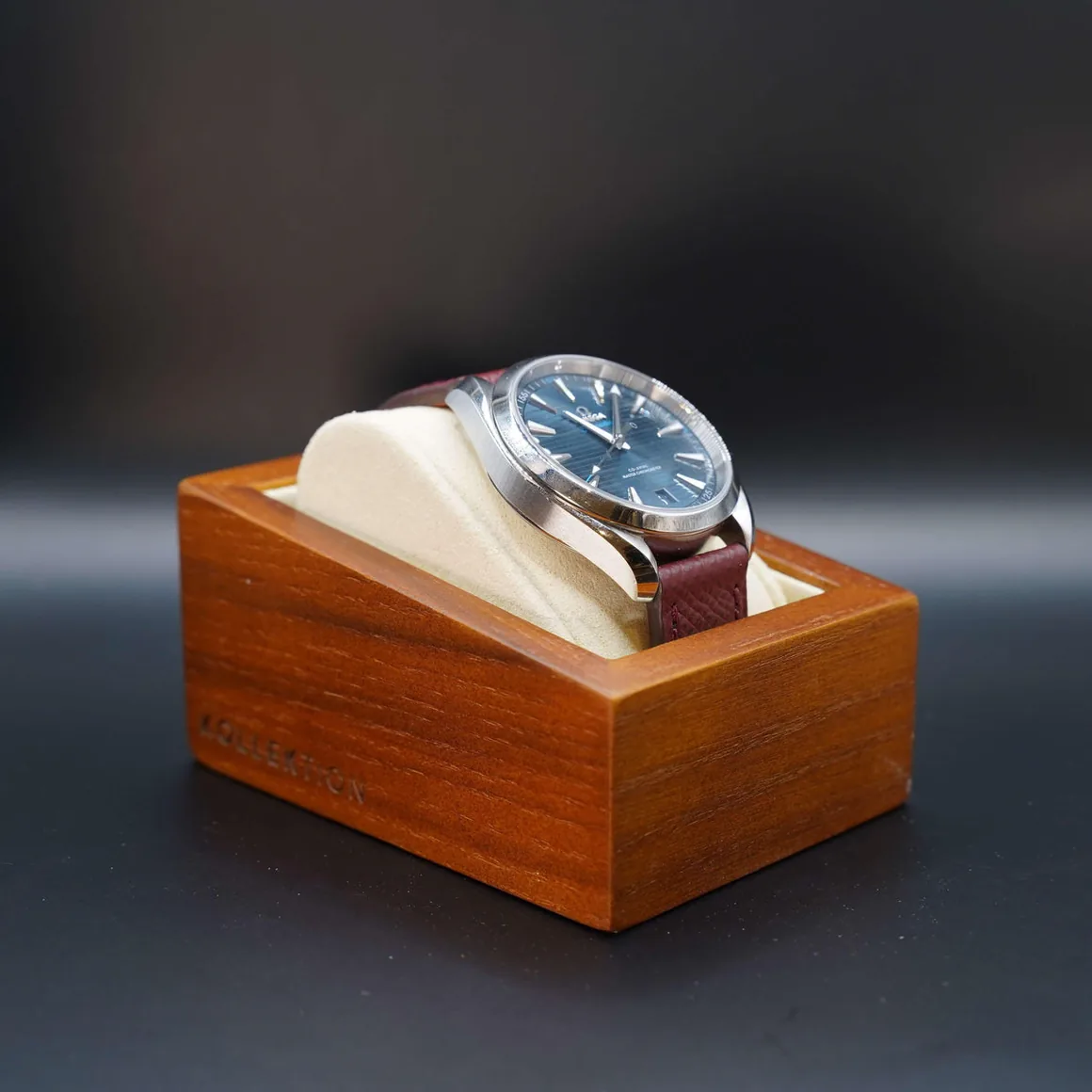
A dedicated display case solves this without ceremony. A single-watch case keeps the piece isolated, supported and visible, which also means you actually wear it — watches that disappear into a drawer tend to stay there.
Support the strap, do not flatten it
This is what a watch pillow is for, and it is the part most people skip. A cushion holds the strap in the same gentle curve it takes on your wrist, so the leather never creases along a single line.
Fit matters more than material here. A pillow that is too small lets the watch slide and rattle; one that is too large stretches the strap and puts tension on the spring bars. Aim for a cushion that fills the strap loop with light, even contact and no stretch.
Get the environment right
Watches are happiest in the same conditions people are: room temperature, moderate humidity, out of direct light.
- Aim for 40–55% relative humidity. Below that, leather dries; above it, corrosion and mould become real risks.
- Keep watches away from windows and off sunny shelves. UV fades dials and lume permanently.
- Store away from speakers, laptops, and magnetic clasps. Magnetism will not scratch anything but it will wreck the accuracy of a mechanical movement.
- Avoid bathrooms. The daily humidity swing is the worst environment in most homes.
Mechanical, quartz and smart: different needs
An automatic that will sit unworn for months is better off fully wound down and stored than left on a winder permanently — continuous winding means continuous wear on the lubricants. Wind it and wear it every few months instead.
For quartz watches stored long-term, pull the crown to the setting position to stop the movement, or remove the battery if you are storing it for more than a year. A leaking cell is the most common way a stored quartz watch dies.
A simple routine that works
Wipe the case and strap with a dry microfibre cloth when you take the watch off — skin oils and salt are mildly corrosive. Return it to its own compartment on its own cushion. Rotate through the collection so nothing sits untouched for a year.
That is genuinely the whole system. The equipment that makes it effortless is a case per watch and a correctly sized cushion inside it.